Article: Kota Doria: A Sari with a Drape of Clouds
Kota Doria: A Sari with a Drape of Clouds
Kota Doria didn't actually begin in Kota. The weave traces back to Mysore, where a community of weavers known as the Masurias practiced a version of this fine checked technique. Sometime in the mid-to-late 1600s, Rao Kishore Singh, a general serving under the Mughals, brought these weavers north to Kota in Rajasthan. What followed was a genuine merger of traditions: southern silk-weaving know-how meeting Rajasthan's cotton craft, settled into the villages around Kaithoon, where the fabric is still woven on pit looms today, nearly four centuries later.
This is a kind of silk that does not behave like silk at all. Kota Doria does not fall heavy. It does not cling. It moves more like breath than fabric, wrapping around you the way air does, barely there but somehow still felt.
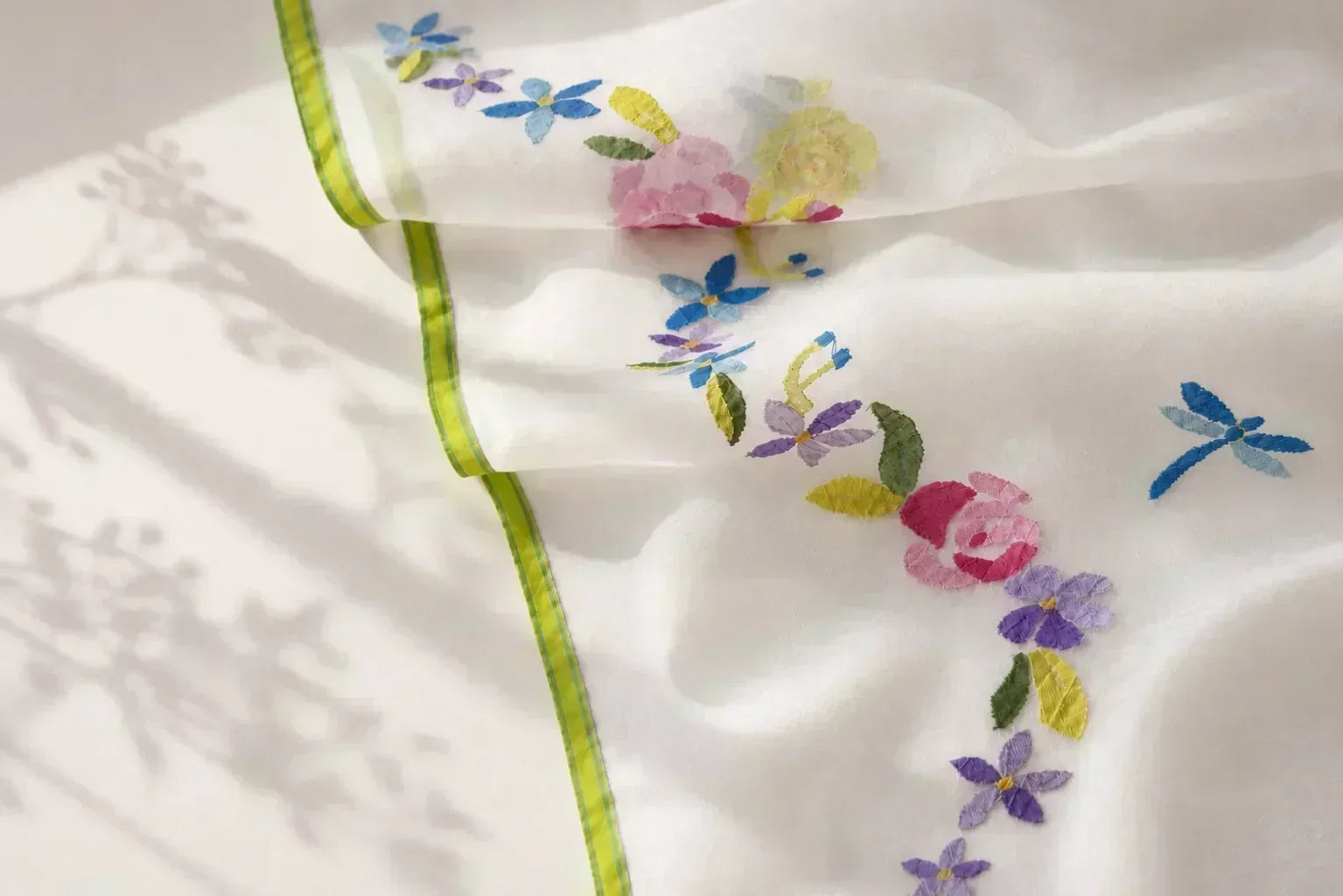
Hold it up to light and you can see straight through it.
The Weave Is Built on Gaps, Not Density
Most fine fabrics get their softness from tight, heavy weaving. Kota Doria does the opposite.
Its signature checks, tiny square openings called khats, come from deliberate gaps left in the weave. Fewer threads, placed with more precision. It is one of the rare crafts where less thread, done well, is what makes it special.
Get the tension even slightly wrong, and the checks go uneven. There is no machine shortcut for this. A weaver has to feel it as they go.
Why It Drapes Like Nothing Else
Because it carries almost no weight, Kota Doria follows the body instead of fighting it. Less like fabric settling into place, more like sheer curtains making the silhouette graceful.
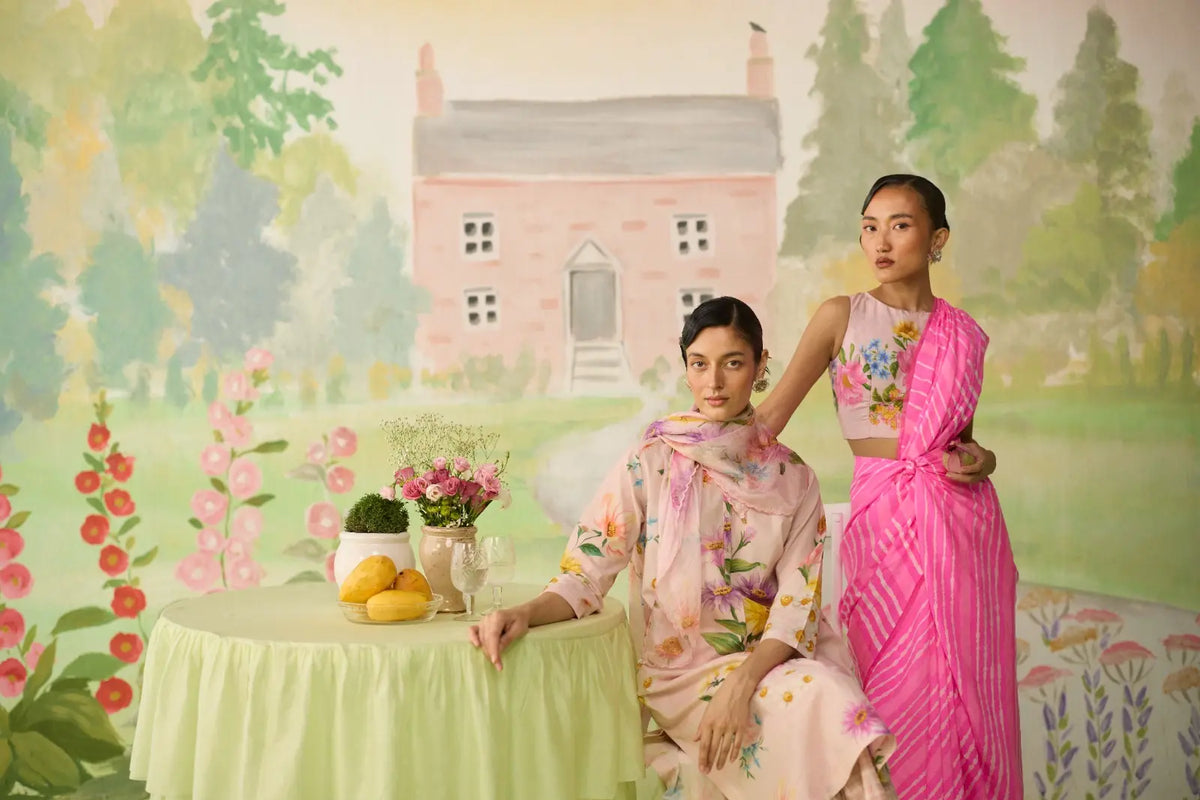
This is exactly why the Royal Blue Bouquet sari feels less like something you put on, and more like something you settle into. Florals scattered across a deep royal blue that shifts tone depending on the light.
The scalloped edge only really works on a fabric this light. On something heavier, it would look clumsy.
Two Saris, Two Different Moods
The Royal Blue Bouquet feels like dusk. Deep, quiet, a little dramatic.
The Bougainville Kota Doria is the opposite hour. Brighter, bolder, the print pulling straight from the flower it is named after, spilling across the fabric the way real bougainville spills over a wall.
Both share the same handwoven base. Both come with a matching blouse piece in handwoven mulberry silk, finished with the same attention as the sari itself.
Small Details, Doing Real Work
The beaded tassels are not just decoration. Because the fabric is so light, they give the sari just enough weight to sit properly instead of floating away.
Nothing here is in a hurry, because a fabric this sheer cannot hide a rushed finish. Every uneven stitch would show.
What You Only Notice Once You Wear It
Most people notice the print first. It takes actually wearing the sari to understand the rest.
How it feels cool against the skin. How six yards can weigh almost nothing and still feel complete. How it moves with you, not around you, like a cloud that decided to stay a little while longer.
That is what this weave has always been quietly good at. Getting out of the way, so the person wearing it can move freely.